
Bone Broth Recipe Using Fresh or BBQ Bones | Gelatin-Rich & Nutrient-Dense
How to Make Bone Broth from Fresh or Saved BBQ Bones
Turning your barbeque leftovers into liquid gold
Download the Recipe Card Here
We love cooking with fire. Barbeque chicken, asado ribs, marrow bones over coals. There is something primal and satisfying about grilling.
But just as much as we love barbeque, we value nutrition and using every part of the animal. That is why bone broth is a staple in our kitchen.
After a weekend cook-up, we save the bones. Some of the asado bones from our previous cook, chicken frames from barbeque chicken, brisket bones, marrow bones. They go straight into the freezer. Once we have enough to fill a pot, we make litres of bone broth.
Nothing wasted. Everything maximised.
The Best Bones for Bone Broth
The secret to rich, gelatinous bone broth is using collagen and cartilage-rich bones.
We love using:
Bone marrow bones
Chicken frames
Chicken feet
Chicken necks
Brisket bones
Lamb bones
Saved asado bones from the grill
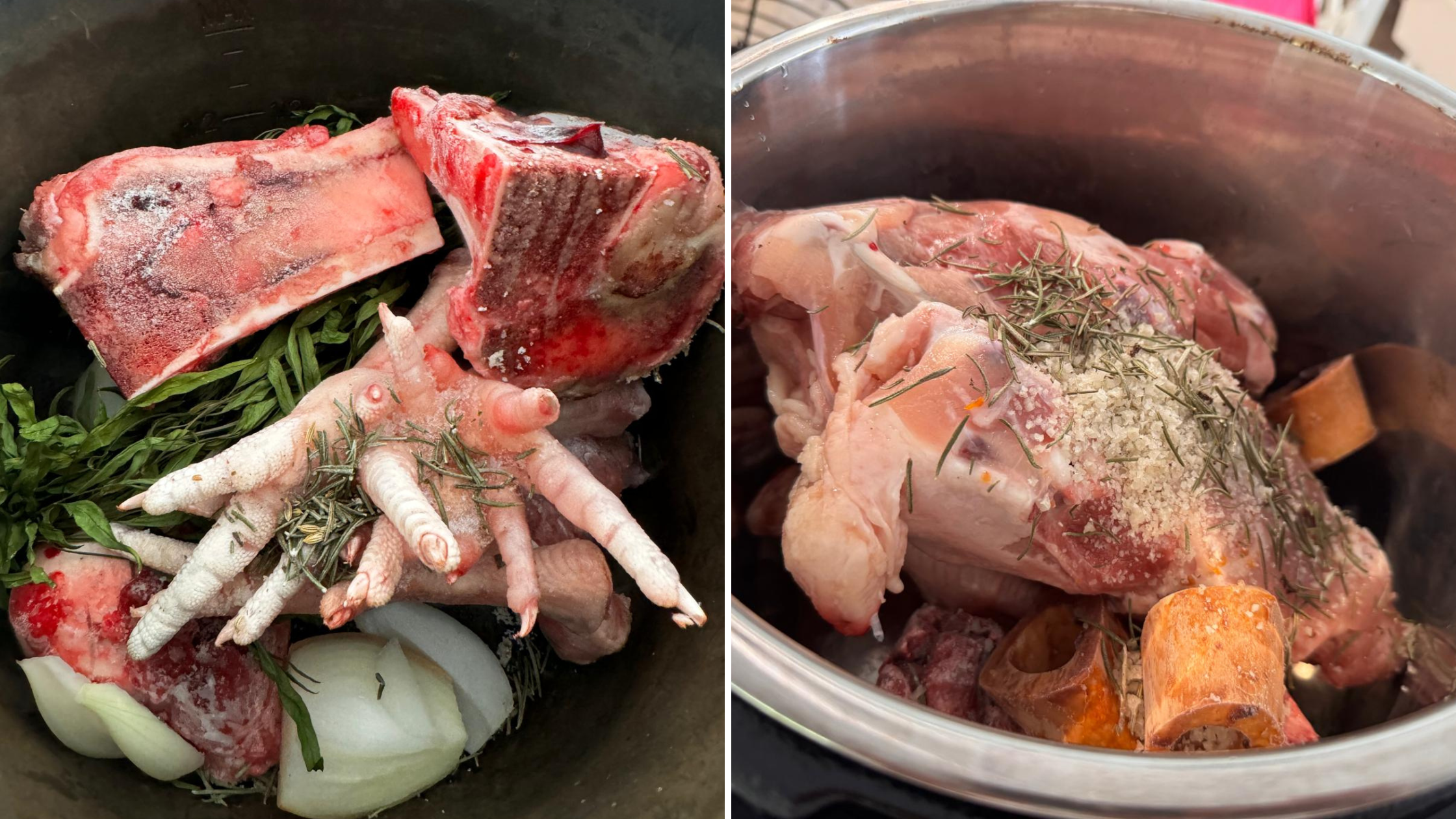
Cartilage-heavy bones are what give broth that jelly-like consistency once chilled.
You can absolutely use:
Fresh bones from your butcher
Cooked bones saved from a previous meal
BBQ bones stored in the freezer
In fact, roasted or grilled bones add deeper flavour.
If you are making asado regularly, save some of those bones in the freezer and batch your broth once you have enough to fill a stockpot. It is efficient, economical and incredibly nourishing.
Why Add Vinegar, Wine and Eggshells?
To draw out amino acids and minerals from the bones, we always add:
A splash of vinegar or wine
Garlic and onions
Ginger
Turmeric
Crushed eggshells for additional calcium
The acidity helps extract minerals during the long simmer. Turmeric adds warmth and gives the broth that rich golden colour.
Vegetable scraps such as onion skins, carrot tops and celery leaves add flavour and extra nutrients.
How to Make Bone Broth
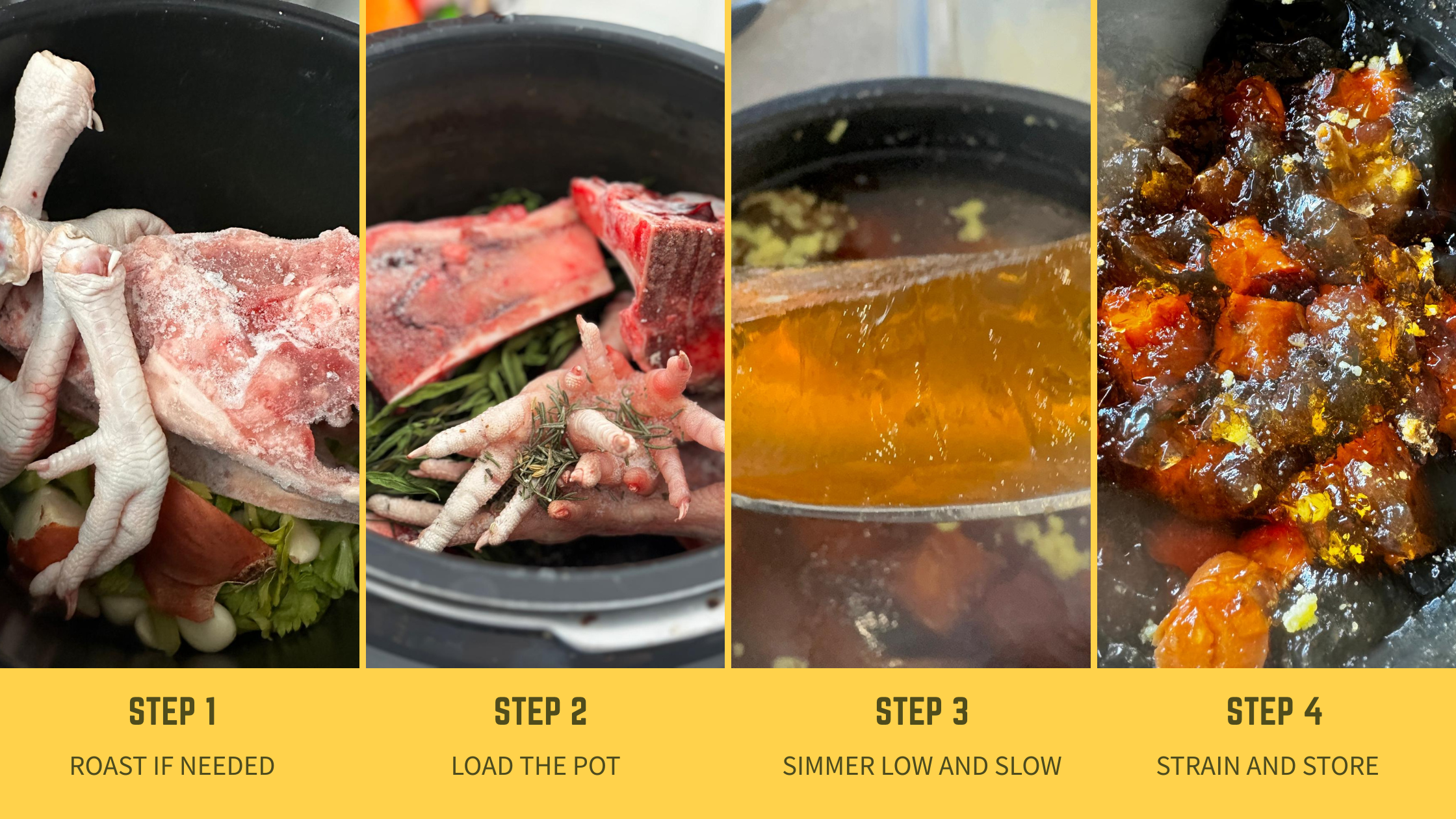
Step 1: Roast if Needed
If using fresh raw bones, roast at 200°C for 30 to 40 minutes to deepen flavour. Saved barbeque bones can go straight into the pot.
Step 2: Load the Pot
Fill a large stockpot with bones. The key to extra gelatinous broth is a higher bone-to-water ratio. Always use more bones and just enough water to cover them.
Add:
Fresh vegetables
Vegetable scraps
Garlic, ginger and turmeric
A splash of vinegar or wine
Optional crushed eggshells
Cover with filtered water.
Step 3: Simmer Low and Slow
Bring to a gentle boil, then reduce to a very low simmer.
Simmer times:
Chicken bones: 12 to 24 hours
Beef or lamb bones: 24 to 36 hours
Skim foam if necessary.
Step 4: Strain and Store
Strain through a fine sieve. Allow to cool.
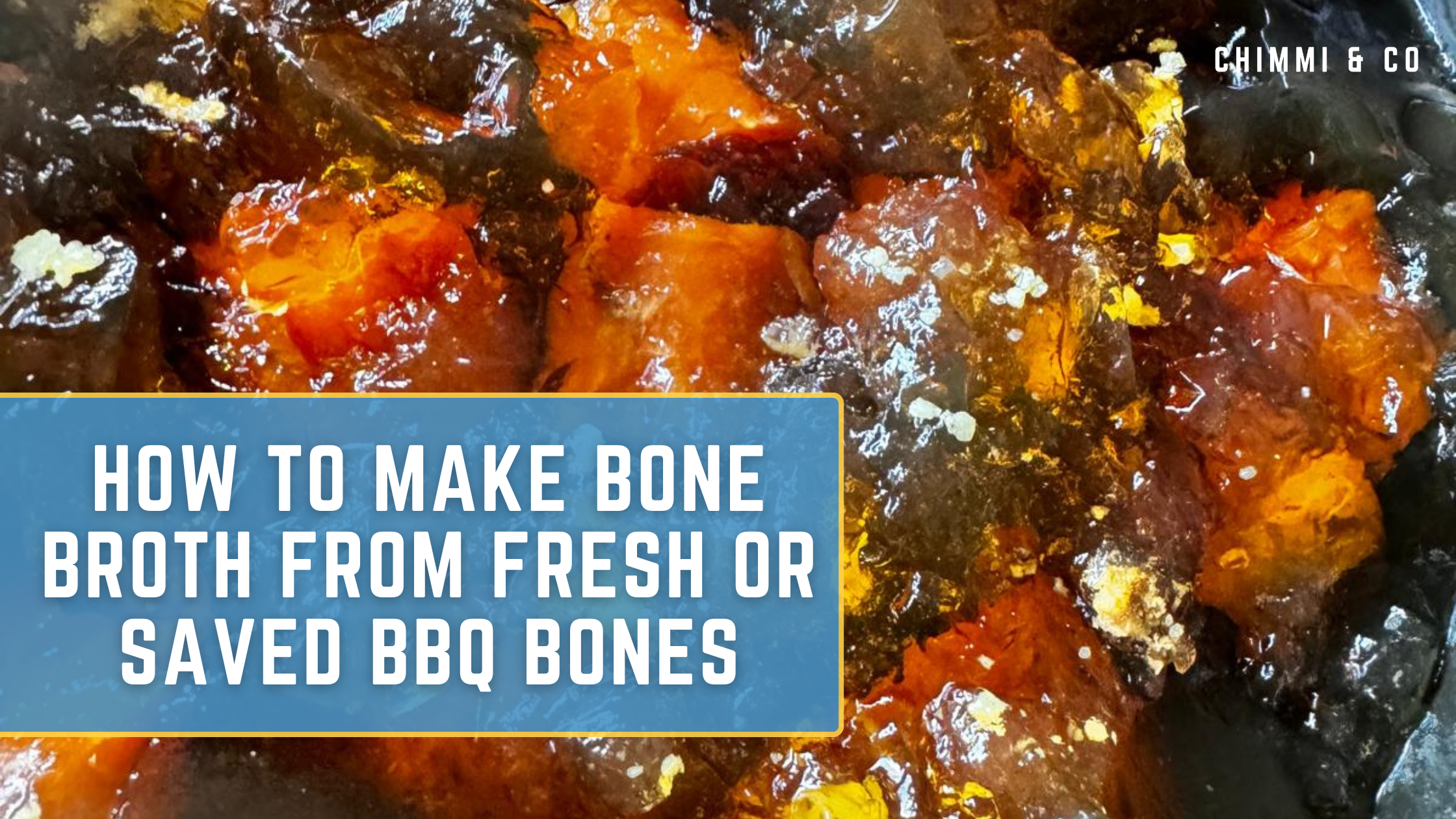
If you have used enough collagen-rich bones, the broth should set into a jelly once chilled. That is exactly what you want.
Store:
In the fridge for up to 5 days
In the freezer for several months
We often freeze in portions so we can grab what we need for cooking.
Benefits of Bone Broth
Bone broth contains:
Collagen and gelatin
Amino acids such as glycine and proline
Minerals like calcium, magnesium and phosphorus
Research discussed by the Cleveland Clinic notes that collagen breaks down into gelatin during cooking and contributes to overall protein intake as part of a balanced diet.
The Harvard T.H. Chan School of Public Health also explains that collagen is a structural protein important for connective tissues.
While bone broth is not a miracle cure, it can be a nourishing addition to your meals and a practical way to maximise ingredients you already use.
How We Use Bone Broth in Everyday Cooking
Once you start using bone broth, plain water feels like a missed opportunity.
We use it for:
Cooking Rice
Replace water with bone broth. It adds depth and richness instantly.
Bolognese and Sauce Bases
Use bone broth in Bolognese, tomato-based sauces and gravies to intensify flavour.
Soups and Stews
A natural base that adds body and nutrition.
Moussaka and Lasagne
Incorporate bone broth into meat sauces or béchamel layers for added depth.
It elevates everyday cooking without extra effort.
From Chimichurri to Broth: Full Circle Cooking
While chimichurri is not traditionally part of bone broth, it often plays a role in how we get there.
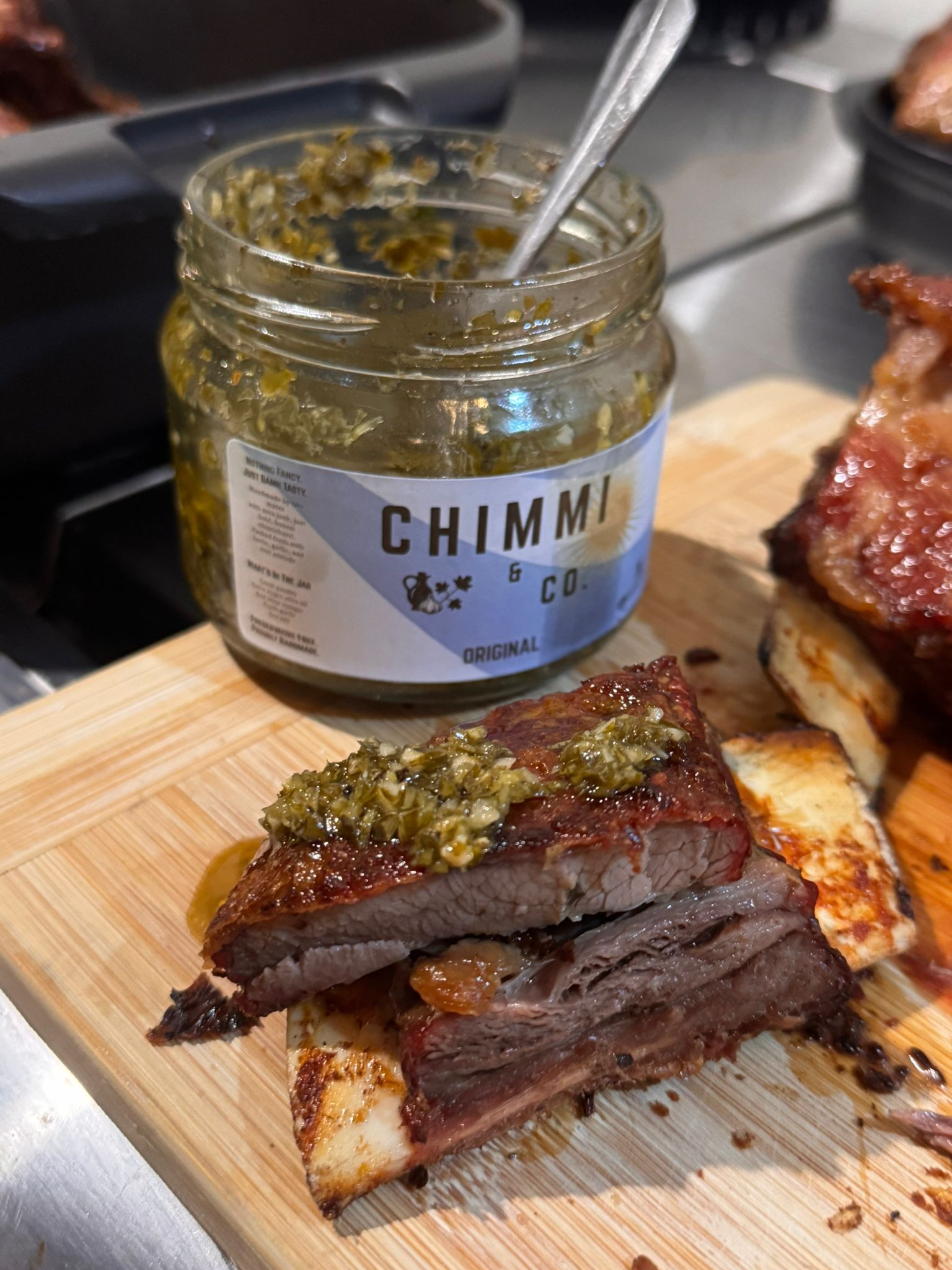
We grill marrow bones with chimichurri. We cook asado over coals. We barbeque chicken. Then we save those bones.
The flavour journey does not end on the grill.
If you loved the chimichurri-marinated bone marrow, or our asado cook-ups, do not forget to follow Chimmi and Co for more recipe ideas that balance bold barbeque flavours with real, practical nutrition.
Because we believe you can love fire cooking and still value nourishment. You can enjoy smoky, rich meals and still turn leftovers into something wholesome.
Frequently Asked Questions
Can you use barbeque bones for bone broth?
Yes. In fact, roasted or grilled bones add deeper flavour. We regularly use saved asado and barbeque chicken bones.
Why is my broth not gelatinous?
You may need more collagen-rich bones such as chicken feet, necks or marrow bones. Also ensure a higher bone-to-water ratio.
Why add vinegar or wine?
The acidity helps draw minerals and amino acids from the bones during simmering.
How long should you simmer bone broth?
Chicken bones: 12 to 24 hours.
Beef or lamb bones: 24 to 36 hours.
Can you freeze bone broth?
Yes. Freeze in portions for easy use in cooking.
We love barbeque grilling. We love smoky flavour. But we also love nutrition and using ingredients fully.
Saving bones from marrow cooks, barbeque chicken and asado means that when the freezer fills up, we can turn it all into litres of nourishing bone broth.
It is practical. It is economical. It is deeply satisfying.
From fire to freezer to stockpot. Full circle cooking at its best.


